






Equine Dentistry
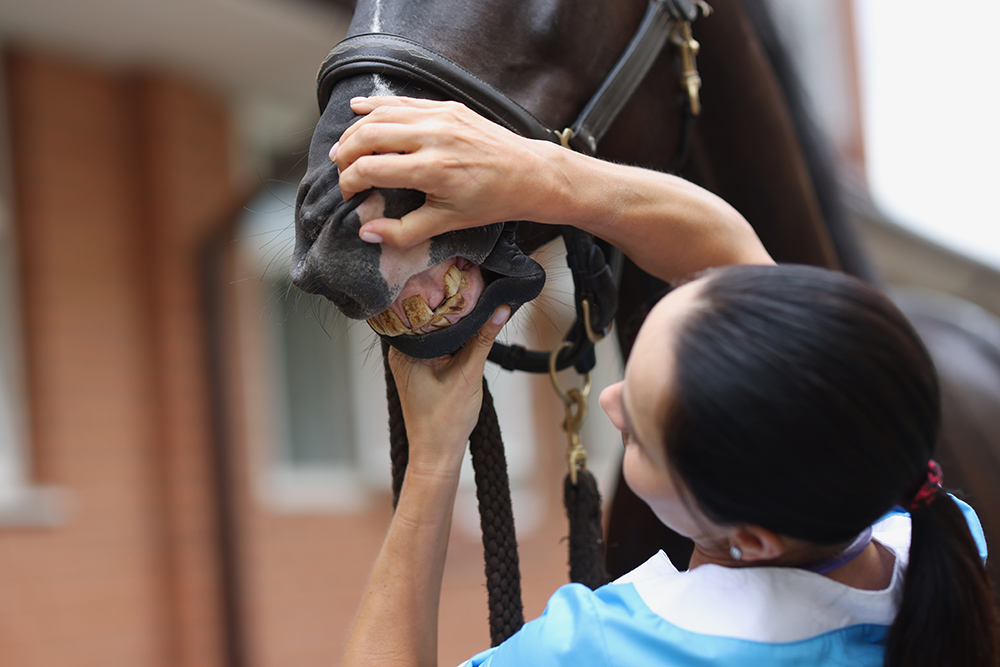
Equine dentistry is the evaluation, diagnosis, and treatment of conditions affecting a horse’s teeth, gums, jaw, and oral soft tissues. A core component of equine dentistry is dental floating, which involves filing down the sharp enamel points that naturally develop over time as a horse chews.
Horses’ teeth erupt continuously throughout life and are worn down by grinding against opposing teeth. However, the horse’s upper jaw (maxilla) is wider than the lower jaw (mandible). As a result, the outer edges of the upper teeth and the inner edges of the lower teeth do not wear evenly. This imbalance leads to the formation of sharp enamel points that, if left unaddressed, can cause ulceration of the cheeks and tongue.
These painful sores may interfere with eating and can lead to discomfort, behavioral changes, and performance issues when ridden. New enamel points can develop in a matter of months, making routine dental evaluation essential.
What to Expect During Dentistry Visit
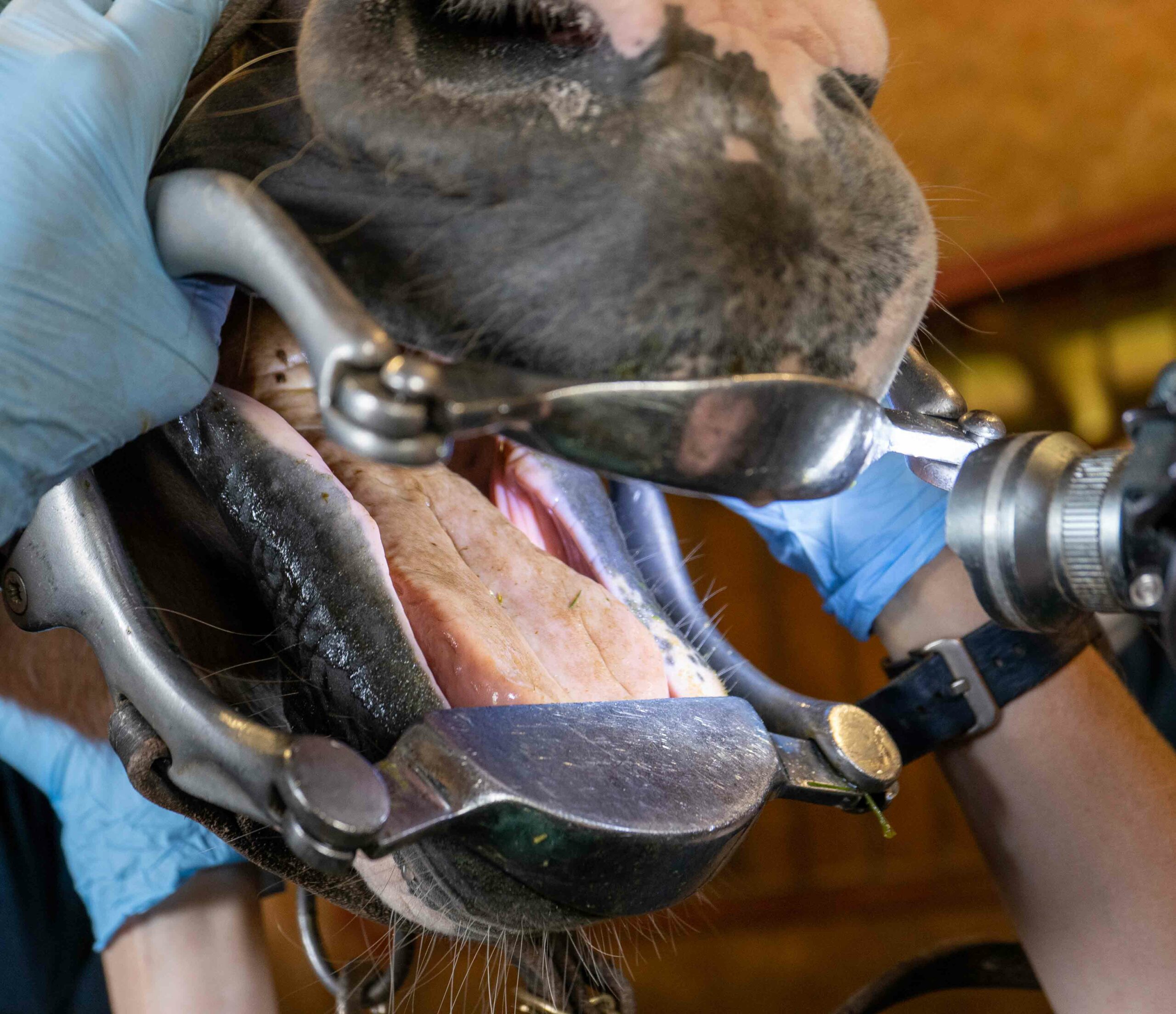
During a dental visit, your veterinarian performs a complete oral examination using appropriate restraint, sedation when indicated, and specialized dental equipment. A full-mouth speculum is placed to allow safe, thorough visualization of all teeth and oral
structures.
Dental floating involves carefully and strategically reducing sharp enamel points and correcting abnormalities such as hooks, ramps, steps, and wave mouth. The goal is to restore proper dental balance and function while preserving healthy tooth structure.
Today, motorized (power) dental floats are the standard of care. Horses are safely sedated, and the head is supported in a dental halter or on a dental stand. Power equipment allows for efficient, precise correction of dental abnormalities while minimizing treatment time and stress on the horse.
Benefits of Routine Equine Dentistry
Regular dental care provides significant benefits for horses of all ages, including:
-
 Improved comfort and reduced oral pain
-
Better chewing efficiency and feed utilization
-
Decreased risk of ulcers to the cheeks and tongue
-
Improved body condition and weight maintenance
-
Enhanced rideability and acceptance of the bit
-
Reduced risk of choke, colic, and intestinal impactions
-
Early detection of dental disease or abnormalities
Proper dental function is essential for optimal digestion. When a horse cannot adequately break down feed into appropriate particle size, nutrient absorption may be compromised, increasing the risk of gastrointestinal complications.
Signs Your Horse May Need a Dental Exam
Dental discomfort can be subtle, and many horses show signs only after disease has progressed. Common symptoms that may warrant a dental exam include:
-
Tilting the head while eating
-
Quidding hay or dropping grain
-
Slow or abnormal chewing
-
Foul-smelling breath or nasal discharge
-
Weight loss or difficulty maintaining body condition
-
Head shaking or resistance under saddle
-
Refusal to accept the bit or problems working in a bit
Poorly chewed feed may also increase the risk of esophageal choke, colic, or intestinal impaction. Even in the absence of visible symptoms, routine dental exams are strongly recommended.
Why Veterinary Dentistry Matters
Veterinary dentistry goes beyond floating teeth—it involves medical evaluation and diagnosis. A veterinarian is trained to identify dental pathology, oral disease, and conditions that may require additional treatment such as extractions or advanced care.
In the state of Minnesota, equine dentistry is a medical procedure that must be performed by a licensed veterinarian or under the direct supervision of a veterinarian.
In Minnesota, it is illegal for unlicensed individuals (lay dentists) to perform dental procedures, including floating teeth with motorized equipment or using sedation.
Risks of Using Lay Dentists Include:
-
Missed or undiagnosed dental disease
-
Over-floating or removal of excessive tooth structure
-
Inadequate pain control or unsafe restraint
-
Failure to identify conditions requiring extraction or medical treatment
-
Increased risk of complications, chronic discomfort, and long-term damage
While lay services may seem less expensive, the potential harm to your horse far outweighs the short-term savings. Veterinary dentistry ensures safe, legal, and medically appropriate care to protect your horse’s health, performance, and long-term well-being.
Aftercare & Ongoing Dental Recommendations
After dental work:
-
Horses may remain mildly sedated for several hours
-
Normal eating and drinking usually resume the same day
-
Softened feed may be recommended in select cases
-
Riding should be avoided until sedation has fully worn off
Dental Recommendations
Most horses should have their teeth examined by a veterinarian at least once yearly, even if no problems are apparent. Regular evaluations allow early detection of dental issues and help maintain comfort, performance, and overall health.
The frequency of dental care depends on age, dental anatomy, and bite alignment:
-
Adult horses with normal dentition: Typically benefit from exams and floats every 6–12 months, depending on how quickly sharp enamel points, hooks, or other abnormalities develop.
-
Geriatric horses: Older horses may develop loose or missing teeth. Once a tooth is lost, remaining teeth can overgrow without an opposing surface, so annual or more frequent floats are necessary to prevent uneven wear and oral pain.
-
Young horses: Should be monitored for loose caps (baby teeth) and wolf teeth, which are often removed to prevent interference with the bit and ensure proper eruption of permanent teeth.
-
Horses with bite abnormalities or dental pathology: Horses with malocclusions, periodontal disease, or rapid point formation may require more frequent dental visits to maintain comfort and function.
By tailoring dental care to your horse’s age, anatomy, and individual needs, veterinarians can prevent oral pain, improve feed utilization, and support long-term health and performance.
Faqs
Frequently Asked Questions About Equine Dentistry
Why is dental care important for horses?
Routine dental care helps prevent painful sharp enamel points and other dental abnormalities that can interfere with eating, comfort, and performance. Regular dental exams help ensure your horse can chew properly, maintain a healthy weight, and avoid complications such as ulcers, choke, or colic.
What is dental floating?
Dental floating is a procedure that smooths sharp enamel points and corrects uneven wear on a horse’s teeth. Because horses’ teeth grow and wear continuously, floating helps restore proper balance in the mouth and prevents painful sores on the cheeks and tongue.
How often should my horse have a dental exam?
Most horses should have a dental examination at least once a year. However, younger horses, senior horses, and those with dental abnormalities may require more frequent evaluations to maintain proper dental health and comfort.
What happens during an equine dental appointment?
During a dental visit, the veterinarian performs a thorough oral examination using a full-mouth speculum to safely evaluate all teeth and oral structures. Horses are typically sedated for comfort and safety, and specialized dental equipment is used to float teeth and correct dental abnormalities.
What signs indicate my horse may need a dental exam?
Signs of dental issues may include dropping feed, slow chewing, weight loss, bad breath, head tilting while eating, resistance to the bit, or behavioral changes under saddle. Even if no symptoms are present, routine dental exams are still recommended to detect problems early.